Inner Circle Creator
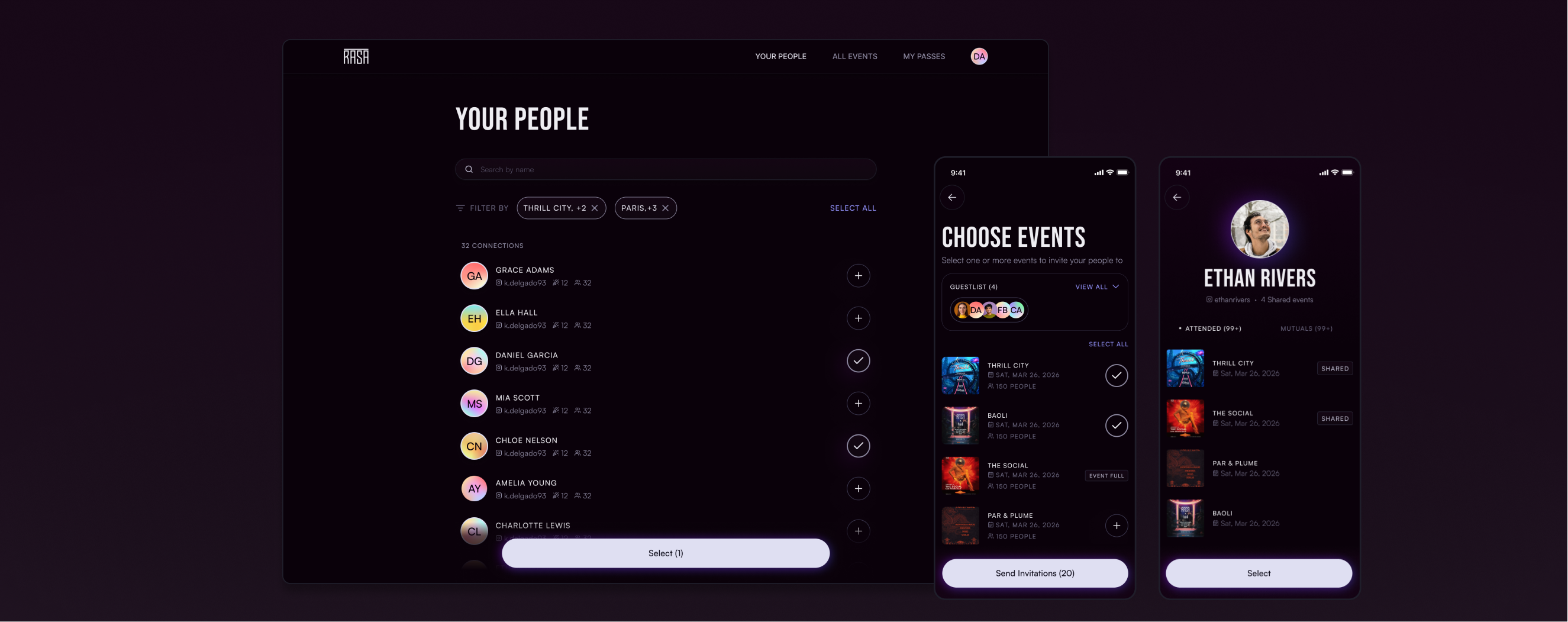
RASA events are not just about the party, but who you’re with to enjoy them. Research brought us to one key persona driving this project: the person who puts their friends on, plans the group chat, and measures a good night by the memories made. They are also RASA's most natural growth engine.
In RASA we wanted to build a loyalty system to drove shares, faster sell-outs, and higher in-event spend. But before designing rewards, I needed to understand what users actually valued. The platform had no social layer. Any loyalty system built on top of that would have had nothing to hold onto.



What do users actually need to feel about RASA before being rewarded means anything to them?
Build the emotional foundation first
The research pointed to one clear first step: give users a way to see their real connections within RASA. Not followers, not a public graph. Their friends and the more importantly the people they had actually shared a dance floor with. The shared event count on each row was the emotional anchor, turning a contact list into a record of real experiences together.
Inviting as a group action
Research told us users wanted to plan outings with friends, not broadcast events publicly. I built the invite flow around batch selection. Users compose their list, then send. A persistent floating CTA holds the count as they select, mirroring how people actually think about inviting a group. The flow works in both directions: starting from your people, or from an event page.
Filters that make a large network actionable
A connections list only works if you can find the right people quickly. Filter by past event for when you want to recreate a specific night with the same crew. Filter by city for our more international members. Filters stay active during selection so you never lose your progress mid-flow.


